
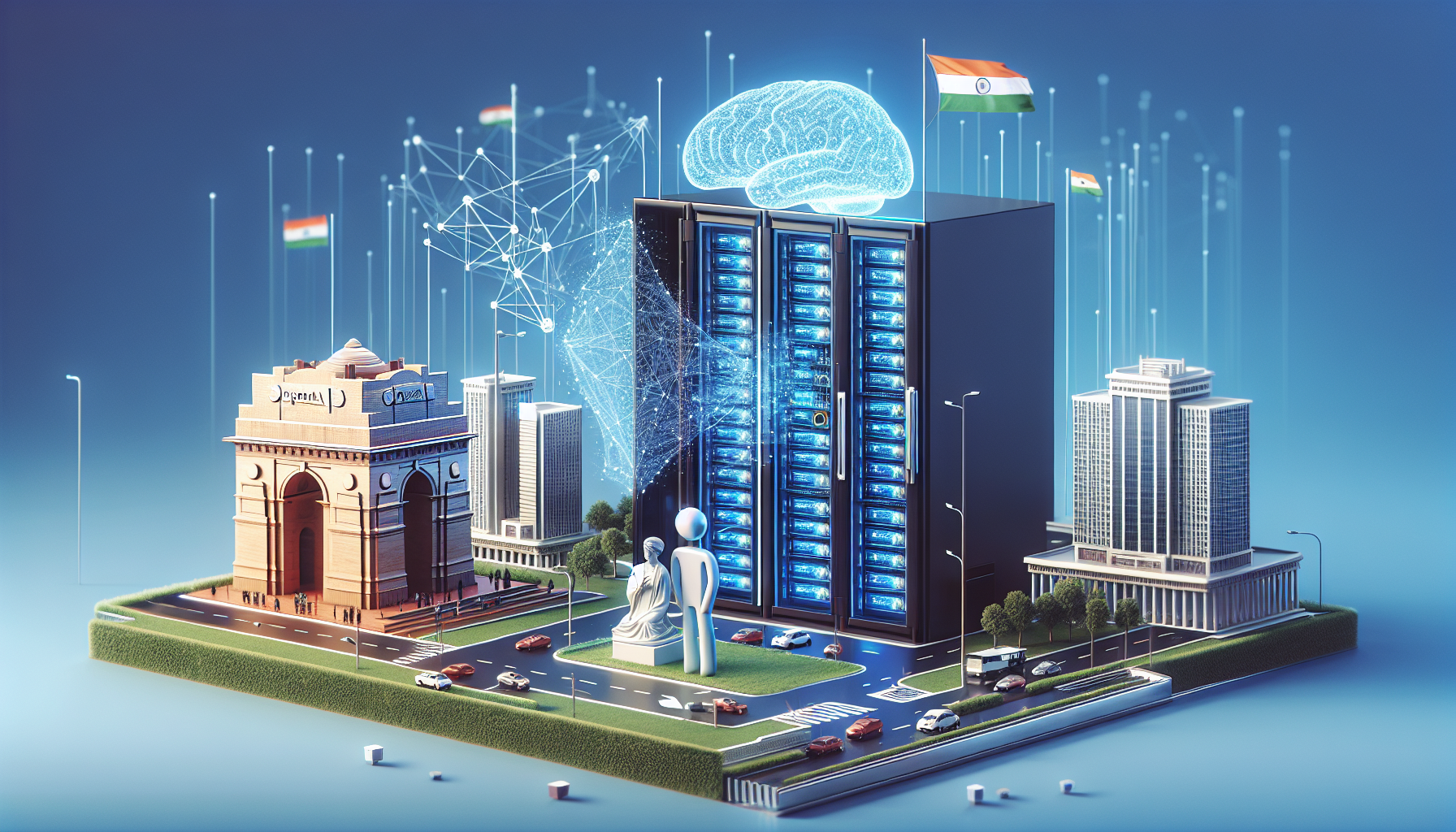
OpenAI Partners with Tata to Launch a 100MW AI Data Center in India, with an Ambitious Plan to Expand to 1GW
In a significant move that underscores the growing importance of India in the global technology landscape, OpenAI has announced a strategic partnership with Tata to establish a 100MW data center dedicated to artificial intelligence in India. This collaboration is poised to be a game-changer, both for the Indian technology ecosystem and for AI development on a global scale. The partnership not only highlights OpenAI's commitment to expanding its footprint in India but also underscores Tata's role as a pivotal player in the country's tech infrastructure.
Setting the Stage for AI Innovation
The burgeoning demand for AI processing power has made it imperative for technology companies to expand their data center capabilities. OpenAI, the organization behind groundbreaking AI technologies like GPT-4, is no exception. As AI models increase in complexity and application, they require more computational resources, leading to a surge in the need for robust data center infrastructure.
According to OpenAI, the initial phase of this partnership with Tata will focus on establishing a 100MW data center. This facility is expected to cater to the increasing computational needs of OpenAI's AI models, which are used worldwide in various applications ranging from natural language processing to advanced machine learning tasks.
Tata's Role in the Partnership
Tata Consultancy Services (TCS), part of the Tata Group, is one of the leading IT service providers globally and is known for its robust infrastructure capabilities and technological expertise. By collaborating with TCS, OpenAI gains access to Tata's extensive experience in managing large-scale technology projects and its established presence in India.
N. Chandrasekaran, Chairman of Tata Sons, expressed his enthusiasm about the partnership, stating, "We are thrilled to work with OpenAI to build this data center capacity in India. It not only reinforces Tata's commitment to technological innovation but also positions India as a global hub for AI development."
The Strategic Importance of India
India's rise as a technology powerhouse is well-documented. With a fast-growing digital economy, a young and tech-savvy population, and government initiatives that support technological advancement, India is an attractive destination for global tech companies. The country is also a significant player in the global IT services market, contributing significantly to the global digital transformation efforts.
OpenAI's decision to establish a data center in India is a testament to the country's strategic importance in the tech world. The Indian government has been proactive in fostering a conducive environment for technology investments, with policies aimed at promoting digital infrastructure and innovation. India's data center market is projected to reach $5 billion by 2025, growing at a compound annual growth rate (CAGR) of around 8% from 2021 to 2025, according to a report by the Data Center Knowledge. This expansion is further highlighted by OpenAI's strategic partnership with Pine Labs, showcasing the collaboration between global tech giants and local fintech leaders.
Scaling Up: The Vision for 1GW
While the establishment of a 100MW data center is an impressive feat, OpenAI's ambitions extend far beyond this initial phase. The company has set its sights on scaling up its data center capacity in India to a whopping 1GW. This expansion is envisioned to take place over the next few years, contingent on the success of the initial phase and the continued growth in demand for AI processing power.
Sam Altman, CEO of OpenAI, remarked, "The strategic expansion of our data center capabilities in India is a crucial step in our mission to ensure that artificial general intelligence benefits all of humanity."
Technological and Economic Implications
The establishment of a large-scale AI data center in India has far-reaching implications. Technologically, it will provide OpenAI with the necessary infrastructure to develop and deploy its AI models more efficiently. This infrastructure is critical for training large language models like GPT-4 and its successors, which require vast amounts of data and computational power.
Economically, the data center is expected to generate significant employment opportunities, both directly and indirectly. According to industry estimates, the data center industry in India is expected to create over 100,000 jobs by 2025. The partnership with Tata will likely contribute to this job creation, providing opportunities for engineers, data scientists, and IT professionals.
Environmental Considerations
As data centers consume large amounts of energy, their environmental impact is a critical consideration. OpenAI and Tata have emphasized their commitment to sustainability, stating that the data center will be designed with energy efficiency in mind. The facility will leverage renewable energy sources to minimize its carbon footprint, aligning with global efforts to combat climate change.
In recent years, there has been a growing trend among tech companies to incorporate green technologies in their operations. According to a report by the International Energy Agency (IEA), data centers accounted for about 1% of global electricity demand in 2019, and this figure is expected to rise with the increasing digitalization of services. By prioritizing renewable energy, OpenAI and Tata aim to mitigate the environmental impact of their data center operations. As the demand for data centers grows, companies are exploring innovative solutions, such as tackling power challenges in AI data centers.
Challenges and Future Prospects
While the partnership between OpenAI and Tata is promising, it is not without challenges. Building a large-scale data center involves significant logistical, regulatory, and technical hurdles. Securing the necessary permits, managing the supply chain, and ensuring the availability of skilled labor are some of the potential obstacles that the partnership may face. Additionally, the rapid pace of technological change means that the data center will need to be adaptable to future advancements.
Despite these challenges, the prospects are bright. The partnership is set to position India as a leader in AI infrastructure, attracting further investments from global technology companies. As the AI industry continues to grow, the demand for data centers will only increase, providing a strong foundation for future expansion.
Conclusion
OpenAI's collaboration with Tata to establish a 100MW AI data center in India marks a significant milestone in the evolution of AI infrastructure in the country. With plans to scale up to 1GW, this partnership is poised to drive technological innovation, economic growth, and sustainable development in India and beyond. As the world becomes increasingly digital, the role of AI in shaping the future cannot be overstated, and India is set to play a central role in this transformation.
For OpenAI, this partnership represents a strategic investment in its mission to advance artificial intelligence in a way that benefits all of humanity. For Tata, it reaffirms its position as a key player in the global technology landscape. Together, they are paving the way for a new era of AI innovation and collaboration. This collaboration comes at a critical time, especially following the recent legal challenges faced by OpenAI.