
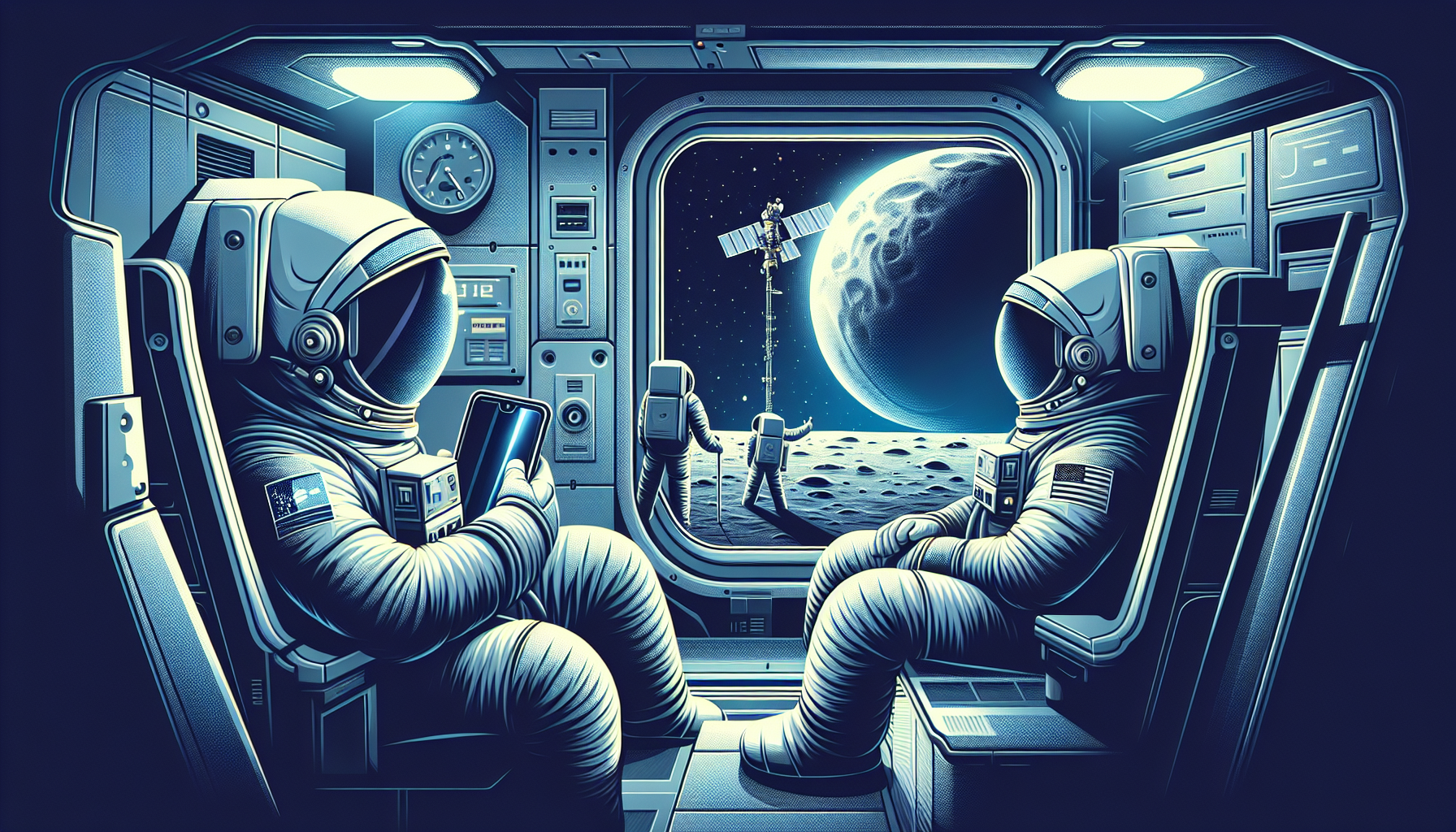
NASA Astronauts Can Now Bring Their Phones on Their Mission to the Moon
As humanity prepares for its ambitious return to the Moon, NASA has announced a groundbreaking policy: astronauts will be allowed to bring personal smartphones on lunar missions. This decision marks a significant departure from past practices, reflecting the evolving role of technology and personal connectivity in space exploration.
The Historical Context of Space Communication
Since the dawn of space exploration, communication has been a pivotal component of any mission. During the Apollo era, astronauts relied on sophisticated yet bulky communication systems to maintain contact with mission control. These systems were engineered for reliability and security, ensuring that astronauts could receive critical instructions and relay information back to Earth.
Fast forward to the International Space Station (ISS) era, and the landscape of communication technology had drastically changed. While the ISS is equipped with advanced communication systems, astronauts have been able to use email and internet services, albeit limited, to stay in touch with family and friends. Even so, personal devices like smartphones were not part of the standard equipment.
Why Allow Smartphones on Lunar Missions?
The decision to allow smartphones on Artemis missions to the Moon is multifaceted. Firstly, smartphones today are incredibly advanced, featuring powerful processors, high-resolution cameras, and various sensors that could prove useful in a lunar environment. Moreover, smartphones can serve as a personal tool for astronauts to document their experiences, manage tasks, and even serve as a backup communication device if necessary.
Secondly, the psychological well-being of astronauts is a critical consideration. Space missions are inherently stressful, and the ability to maintain personal connections with loved ones can greatly enhance an astronaut's mental health. By allowing astronauts to bring their smartphones, NASA aims to provide a sense of normalcy and emotional support during the mission.
The Technical Challenges and Solutions
Bringing smartphones to the Moon is not without its challenges. The lunar environment is harsh, with extreme temperatures, radiation, and dust posing significant risks to electronic devices. To address these challenges, NASA has collaborated with leading technology companies to develop ruggedized versions of popular smartphones, designed to withstand the rigors of space travel.
These space-ready smartphones are equipped with enhanced shielding to protect against radiation and reinforced casings to prevent damage from temperature fluctuations. Additionally, engineers have developed specialized software that allows the phones to interface with the lunar module's communication systems, ensuring secure and reliable connectivity with mission control and Earth-based networks. As technology continues to advance in various fields, including space exploration, it's interesting to note how digital platforms like YouTube's subscription surge is impacting revenue generation on Earth.
Implications for Astronaut Training and Operations
The integration of smartphones into lunar missions will necessitate updates to astronaut training programs. Astronauts will need to be proficient in operating these devices under unconventional conditions and trained to troubleshoot any issues that may arise. Furthermore, mission protocols will need to be adapted to incorporate personal device management, ensuring that the use of smartphones does not interfere with critical mission tasks.
Operationally, smartphones could enhance mission efficiency by providing astronauts with instant access to mission data, schedules, and checklists. The ability to capture high-quality images and videos using smartphone cameras could also aid in scientific documentation and public outreach efforts, bringing the wonders of lunar exploration closer to audiences on Earth.
Privacy and Security Considerations
One of the primary concerns about allowing personal devices in space is ensuring privacy and security. NASA has implemented stringent protocols to safeguard sensitive information and prevent unauthorized access. These protocols include encrypted communication channels, secure data storage solutions, and regular audits to detect and mitigate potential security threats.
Astronauts will be briefed on best practices for maintaining personal privacy and data security, both for their own protection and to safeguard mission integrity. These measures are essential to prevent potential hacking attempts or data breaches that could compromise mission operations. As technology evolves, the importance of data security is becoming increasingly relevant in various fields, including how companies like Tinder are using AI to enhance user experience while ensuring privacy.
The Future of Personal Technology in Space
The decision to allow smartphones on lunar missions is a harbinger of things to come. As space travel becomes more commonplace, the integration of personal technology will likely expand. Future missions to Mars and beyond may see astronauts using even more advanced devices, such as augmented reality headsets and wearable tech, to enhance their capabilities and comfort.
Moreover, the presence of personal technology in space could spur innovation in device design and functionality. Companies may be inspired to develop new technologies specifically for space applications, leading to advancements that could benefit both astronauts and consumers on Earth.
Conclusion
NASA's decision to allow astronauts to bring their smartphones on lunar missions represents a bold step forward in the evolution of space exploration. By embracing personal technology, NASA is acknowledging the importance of connectivity, mental well-being, and operational efficiency in the context of modern space missions.
As humanity ventures back to the Moon and sets its sights on Mars, the integration of personal devices will undoubtedly play a critical role in shaping the future of space exploration. With smartphones in hand, astronauts will be better equipped to navigate the challenges of space travel, document their journeys, and inspire the next generation of explorers. The advancements in technology, such as those seen with ElevenLabs, highlight how innovative funding can propel industries forward, including the integration of devices in space exploration.