
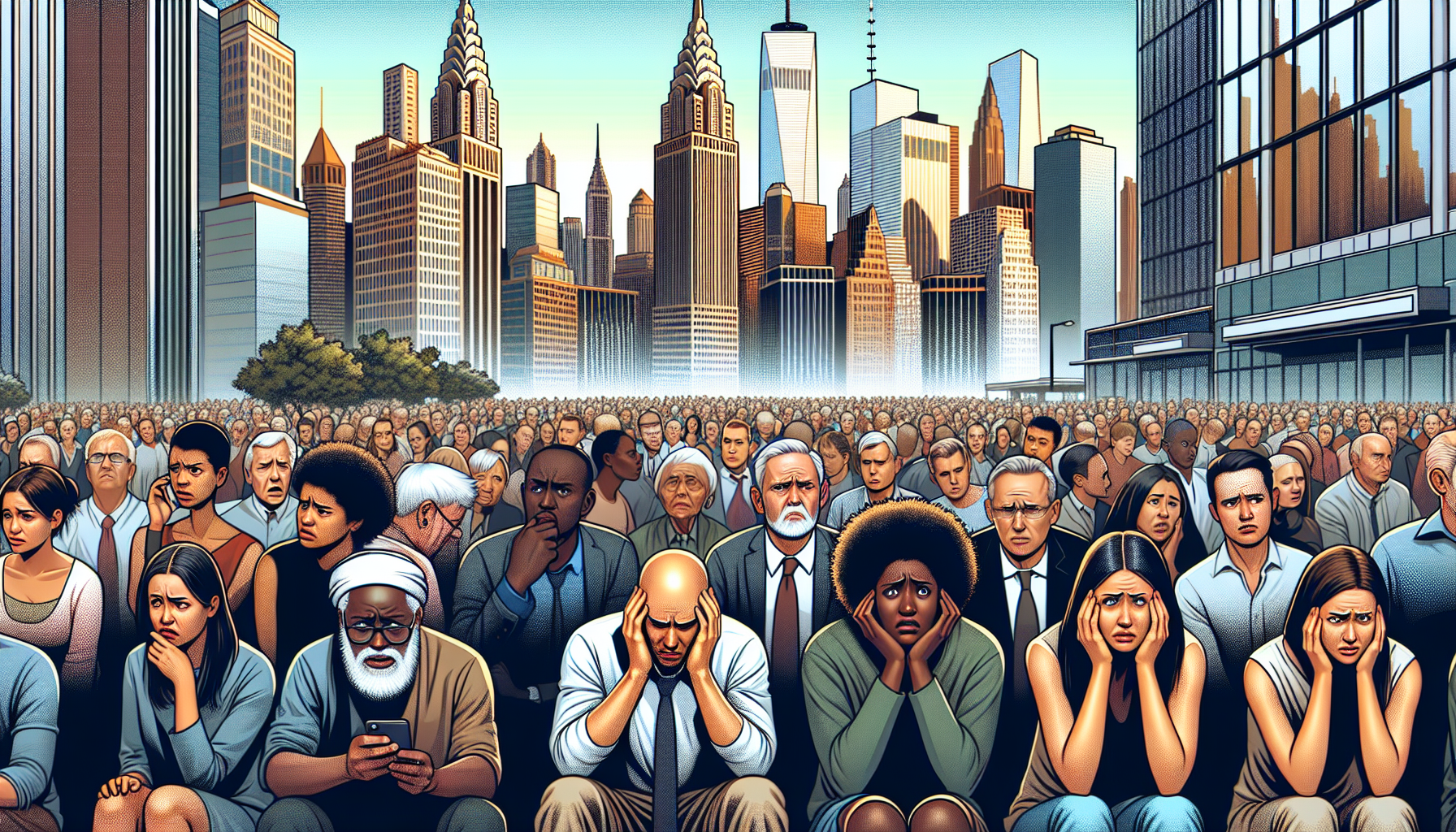
The 'Boomcession': Why Americans Feel Left Behind by a Growing Economy
In recent years, the term "boomcession" has emerged as a descriptor of the paradoxical economic climate where a nation experiences marked economic growth, yet a significant portion of its population feels economically stagnant or worse off. This article delves into the intricate dynamics of the American "boomcession," exploring the reasons why many Americans perceive themselves as being left behind despite the country's growing economy.
Understanding the "Boomcession"
The term "boomcession" is a fusion of "boom" and "recession," indicating a period wherein the overall economy may be expanding, but the benefits of such growth are unevenly distributed. This phenomenon can lead to a situation where economic indicators suggest prosperity, yet personal financial experiences tell a different story for many individuals.
Key Economic Indicators
- GDP Growth: The U.S. has seen consistent GDP growth, averaging around 2.5% annually from 2015 to 2019, before the pandemic-induced recession. In 2021, the GDP growth rate reached an impressive 5.7%, the highest in decades, following the contraction in 2020.
- Unemployment Rate: The unemployment rate has been a bright spot, dropping to approximately 3.5% in 2022, one of the lowest in recent history, indicating a robust job market.
- Stock Market Performance: The S&P 500 has shown remarkable growth, with an average annual return of about 14% from 2010 to 2020, benefiting investors and retirement accounts significantly.
Despite these indicators of a flourishing economy, many Americans report a disconnect between the overall economic health and their personal financial situations.
Why Are Americans Feeling Left Behind?
Stagnant Wage Growth
Stagnant wage growth is one of the primary reasons many Americans feel economically left behind. According to the Bureau of Labor Statistics, while nominal wages have increased, real wage growth has been minimal when adjusted for inflation. Between 2014 and 2023, average hourly earnings grew by about 3% per year, but inflation often outpaced these gains, eroding purchasing power.
In 2022, inflation reached a 40-year high of approximately 7%, far exceeding wage growth. This disparity means that even employed individuals with steady income streams find their earnings insufficient to keep pace with rising living costs.
Rising Cost of Living
The cost of living in the U.S. has escalated significantly, particularly in urban areas where the economy's growth is most visible. Housing costs have surged, with the Federal Reserve's data indicating that home prices increased by nearly 30% from 2020 to 2022. Rent prices also saw a similar upward trend, exacerbating the affordability crisis.
Moreover, the cost of essential goods and services, including healthcare and education, has outpaced general inflation. For example, the College Board reported that tuition fees at public universities have increased by an average of 37% over the past decade, placing higher education out of reach for many families.
Wealth Inequality
Economic growth has not translated into equitable wealth distribution. According to a Pew Research Center analysis, the wealthiest 10% of Americans control nearly 70% of the nation's wealth. This concentration of wealth has been accentuated by stock market gains, which disproportionately benefit higher-income individuals who are more likely to own significant assets.
The Federal Reserve's Survey of Consumer Finances revealed that the median net worth of the top 10% increased by 20% between 2016 and 2022, while the bottom 50% saw a negligible increase of just 2%. This disparity underscores the growing wealth gap, with many Americans feeling excluded from economic prosperity. This trend in wealth distribution can have significant implications for global markets, as evidenced by Asia markets reacting to fluctuations in the US economy.
The Role of Technological Advancements
Technological advancements have been a double-edged sword in the "boomcession." While technology has driven productivity and economic growth, it has also led to job displacement and skill mismatches.
Automation and Job Displacement
Industries such as manufacturing and retail have been heavily impacted by automation, leading to significant job losses. A McKinsey Global Institute report estimated that up to 25% of U.S. jobs could be automated by 2030, with lower-wage jobs being the most vulnerable.
This shift has left many workers needing to reskill or transition to entirely new industries, posing challenges in terms of retraining and acquiring new competencies.
Skill Mismatches
The rapid pace of technological change has also created a skills gap, where the demand for high-skilled labor far outstrips supply. The National Skills Coalition reported that middle-skill jobs, which require more than a high school diploma but less than a four-year degree, comprise 53% of the U.S. labor market, yet only 43% of workers are trained to that level.
This mismatch contributes to underemployment and limits career advancement opportunities for many Americans, furthering the sentiment of being left behind. As the U.S. job market faces these challenges, shifts in international markets, such as Asia markets poised for gains, may also influence economic conditions at home.
Expert Opinions
To gain deeper insights into the "boomcession," we spoke with several experts across different fields.
Economist Dr. Lisa Martinez
Dr. Martinez highlights that the disconnection between macroeconomic success and individual financial health is not new. "We've seen similar patterns in the past. However, the current technological shifts and global economic dynamics exacerbate these issues. Policies need to focus on inclusive growth to ensure that economic benefits reach all segments of society."
Labor Market Analyst John Thompson
Thompson points to the need for robust workforce development programs. "We must invest in education and training programs that align with the skills demanded by today's economy. It's crucial for policy makers to anticipate future job market needs and prepare workers accordingly."
Social Policy Expert Dr. Emma Chen
Dr. Chen emphasizes the role of social safety nets. "Strong social policies, including healthcare access, affordable housing, and education, are fundamental in addressing the economic disparities seen in a boomcession. These measures can mitigate the adverse effects of economic growth that isn't inclusive."
Potential Solutions and Policy Recommendations
Addressing the challenges of a "boomcession" requires a multifaceted approach that includes policy interventions, private sector initiatives, and community engagement.
Policy Interventions
- Wage Policies: Implementing minimum wage increases and promoting wage transparency can help ensure fair compensation for workers.
- Tax Reforms: Progressive taxation could help redistribute wealth more equitably and fund essential public services.
- Investment in Education: Expanding access to affordable education and vocational training can help workers acquire the skills needed in the evolving job market.
Private Sector Initiatives
- Corporate Social Responsibility: Businesses can play a role by investing in local communities, ensuring fair labor practices, and supporting workforce development programs.
- Inclusive Hiring Practices: Companies can implement hiring and promotion practices that prioritize diversity and inclusion, helping to bridge the skills gap and provide opportunities for underrepresented groups.
Community Engagement
- Grassroots Movements: Communities can advocate for change by organizing and voicing their needs, influencing policy decisions at local and national levels.
- Public-Private Partnerships: Collaborations between governments, private companies, and non-profits can create targeted programs that address specific community needs.
Conclusion
The "boomcession" encapsulates the complex interplay between economic growth and personal financial well-being. While the U.S. economy may show signs of prosperity through traditional metrics, these indicators do not capture the full picture of Americans' experiences. To bridge this gap, a concerted effort is needed from policymakers, businesses, and communities to create a more inclusive economy that benefits all citizens.
By understanding and addressing the underlying causes of the "boomcession," the U.S. can work towards a future where economic success is shared more broadly, ensuring that no one feels left behind. This approach is crucial, especially as seen in recent investments by major firms that are shaping the financial landscape.