
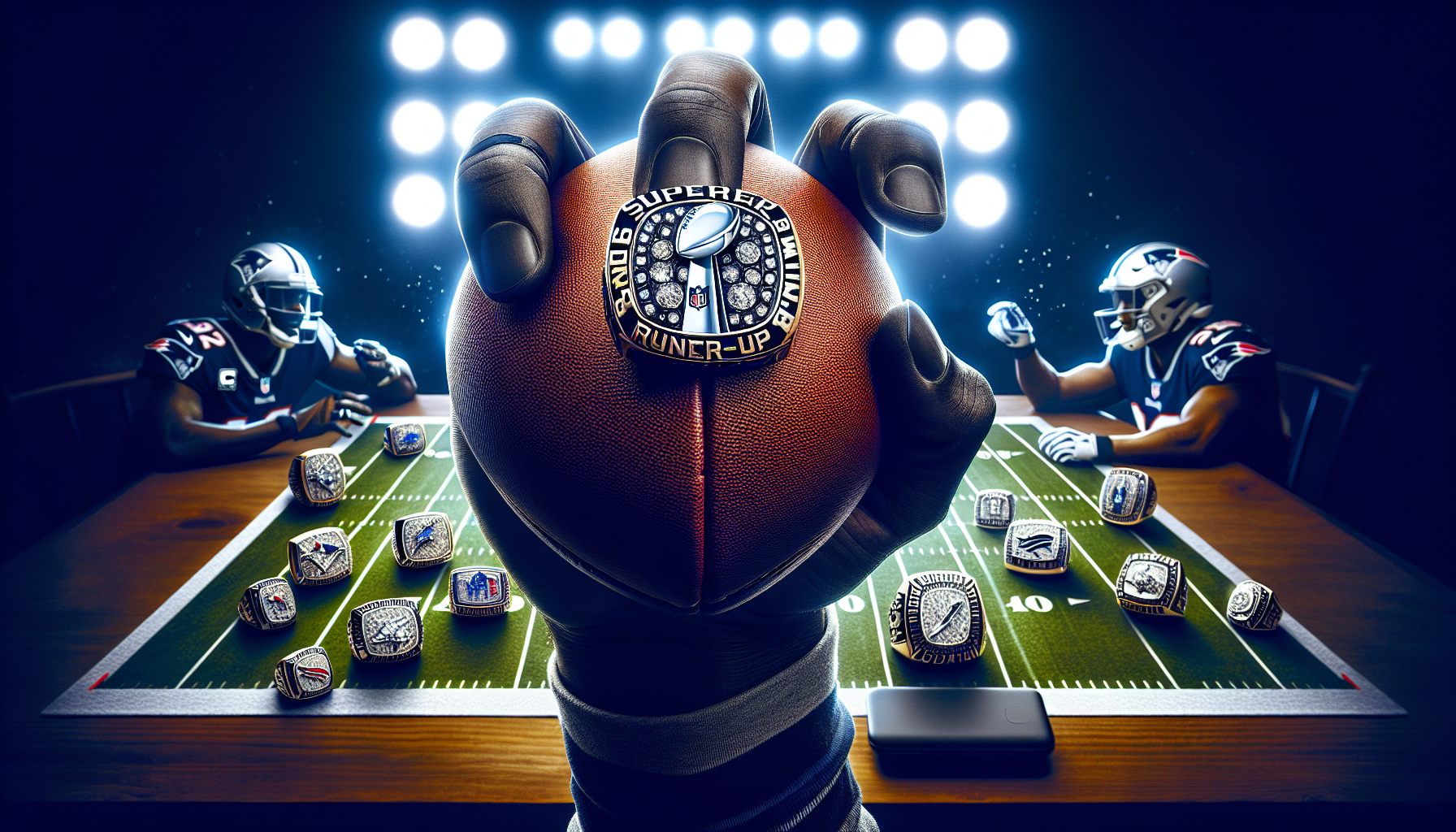
Super Bowl Runner-Up Rings: What NFL Players Really Think
In the world of professional football, the Super Bowl stands as the pinnacle of success. It represents the culmination of grit, determination, and unparalleled athletic prowess. However, for every team that hoists the coveted Lombardi Trophy, there is another team that walks away with the title of "runner-up." While the winners receive the iconic Super Bowl rings, the runners-up are often awarded what are known as "AFC" or "NFC" Championship rings. These rings symbolize the team's achievement in winning their respective conference, but they also serve as a reminder of coming up just short of ultimate glory.
The significance and sentiment surrounding these runner-up rings vary widely among players. To understand their true value and what they represent to those who receive them, it is essential to delve deep into the minds of the NFL athletes who have experienced both the highs of reaching the Super Bowl and the lows of not clinching the championship.
Understanding the Runner-Up Rings
Runner-up rings, often referred to as AFC or NFC Championship rings, are awarded to the players of the team that wins their respective conference but loses in the Super Bowl. These rings are not to be confused with the Super Bowl Championship rings, which are awarded to the winners of the big game.
According to Jostens, a leading manufacturer of championship rings, the design and production of these runner-up rings are typically handled by the teams themselves. They often feature the team's logo, the conference title, and sometimes the player's name and number. While they are not as extravagant as the Super Bowl rings, they are still crafted with precious metals and stones, symbolizing the team's hard-fought journey through the season.
The Players' Perspectives
Opinions about runner-up rings differ among players. For some, these rings are cherished mementos of an incredible season. For others, they are painful reminders of a missed opportunity. Let's explore these varying perspectives.
Embracing the Achievement
For many players, reaching the Super Bowl is an accomplishment in itself. The NFL is an intensely competitive league, and making it to the final game of the season is no small feat. According to NFL statistics, only about 6% of players have the chance to play in a Super Bowl during their careers.
Take, for example, former NFL player Dan Marino, considered one of the greatest quarterbacks of all time. Marino led the Miami Dolphins to Super Bowl XIX, but they fell short against the San Francisco 49ers. Despite the loss, Marino has often spoken about the pride he felt in leading his team to the Super Bowl, and his AFC Championship ring serves as a testament to that achievement.
Similarly, Jim Kelly, legendary quarterback of the Buffalo Bills, led his team to four consecutive Super Bowls in the early 1990s. Although the Bills did not secure a championship victory, Kelly has expressed that the AFC Championship rings remind him of the incredible resilience and teamwork that defined those seasons.
The Painful Reminder
While some players view their runner-up rings with pride, others see them as stark reminders of what could have been. The disappointment of losing on the grandest stage is hard to shake, and for some, the runner-up rings symbolize a haunting "what if."
Thurman Thomas, another key player from the Buffalo Bills' Super Bowl era, has admitted that looking at his AFC Championship rings brings back the pain of losing four consecutive Super Bowls. Despite being proud of his team's achievements, the rings serve as a constant reminder of coming up just short. This sense of bittersweet nostalgia is a common theme among teams that have faced monumental challenges in the Super Bowl, much like the dramatic showdown between the Seahawks and Patriots, as explored in our ultimate Super Bowl guide.
Likewise, former New England Patriots player Tedy Bruschi once remarked that while the runner-up ring is a symbol of a successful season, nothing can replace the feeling of winning a Super Bowl. The Patriots' loss in Super Bowl XLII to the New York Giants was particularly painful, as it dashed their hopes of completing a perfect season.
Statistics and Historical Context
The journey to the Super Bowl is arduous, and only a select few teams experience the thrill of participating. To put this in perspective, since the merger of the AFL and NFL in 1970, only 12 teams have appeared in consecutive Super Bowls, a testament to the challenges of maintaining excellence in the league.
A closer look at the statistics reveals that of the 56 Super Bowl matchups as of 2023, only 14 teams have managed to win the title after losing the previous year. This highlights the difficulty of bouncing back from a runner-up finish to claim the championship.
The New England Patriots' journey from losing Super Bowl XLII to winning Super Bowl XLIX is a testament to perseverance. The Patriots were able to use the lessons learned from their runner-up experiences to ultimately secure the title, showcasing the potential motivation such experiences can provide.
The Emotional Impact on Players
The emotional impact of receiving a runner-up ring goes beyond personal sentiment. It can affect team dynamics, player motivation, and even career trajectories.
Motivation and Resilience
For some players, the sting of losing the Super Bowl acts as a powerful motivator. The runner-up ring becomes a symbol of unfinished business, driving them to work harder in pursuit of a championship. This mindset can be seen in players like Peyton Manning, who after losing Super Bowl XLIV with the Indianapolis Colts, used the experience as fuel to eventually win Super Bowl 50 with the Denver Broncos.
According to a study conducted by the American Psychological Association, athletes who perceive failures as learning experiences are more likely to achieve future success. This finding correlates with the narratives of many NFL players who have turned runner-up finishes into championship victories. This is exemplified by the Seahawks, whose dominant defense clinched a Super Bowl victory after overcoming previous setbacks.
Team Dynamics
The presence of runner-up rings can also influence team dynamics. Players who have experienced the heartbreak of losing the Super Bowl often bring a sense of urgency and determination to the locker room. Their experience can serve as a rallying point for teammates, fostering a culture of resilience and perseverance.
For instance, the Kansas City Chiefs, after their runner-up finish in Super Bowl LV, returned with renewed focus and determination, which was evident in their subsequent performance. The leadership of players like Patrick Mahomes and Travis Kelce played a crucial role in maintaining team morale and focus.
Career Impact
While the runner-up rings are significant, they are not the ultimate goal for most players. The drive to win a Super Bowl often influences career decisions, such as team changes and contract negotiations. Players are sometimes willing to leave teams where they have experienced runner-up finishes in pursuit of better championship prospects.
For example, DeMarcus Ware, after multiple postseason disappointments with the Dallas Cowboys, joined the Denver Broncos and eventually won Super Bowl 50. His decision to change teams was driven by the desire to achieve the ultimate success in the NFL.
The Fans' Perspective
While players have their own personal views on runner-up rings, fans also hold varied opinions. For some fans, these rings are cherished symbols of their team's success and competitive spirit. They serve as reminders of the thrilling journey through the playoffs and the pride of representing their conference on the national stage.
However, other fans see runner-up rings as bittersweet tokens. The disappointment of coming so close to a Super Bowl victory can overshadow the pride of reaching the final game. This sentiment is particularly strong in fanbases that have experienced repeated runner-up finishes, such as the Minnesota Vikings and Buffalo Bills.
Conclusion
Super Bowl runner-up rings occupy a unique place in the narrative of the NFL. They are tangible symbols of both achievement and heartbreak, representing the complexities of the journey to football's ultimate prize. For players, they can serve as cherished mementos, painful reminders, or powerful motivators. For fans, they encapsulate the emotional rollercoaster of a season filled with hope and determination.
As the NFL continues to evolve and new generations of players chase the dream of Super Bowl glory, the runner-up rings will remain a poignant reminder of the thin line between victory and defeat. In the end, they are more than just pieces of jewelry; they are a testament to the relentless pursuit of excellence that defines the sport of football. This relentless pursuit is exemplified by players like Seahawks' Walker, who recently showcased a unique performance that earned him the MVP title.