
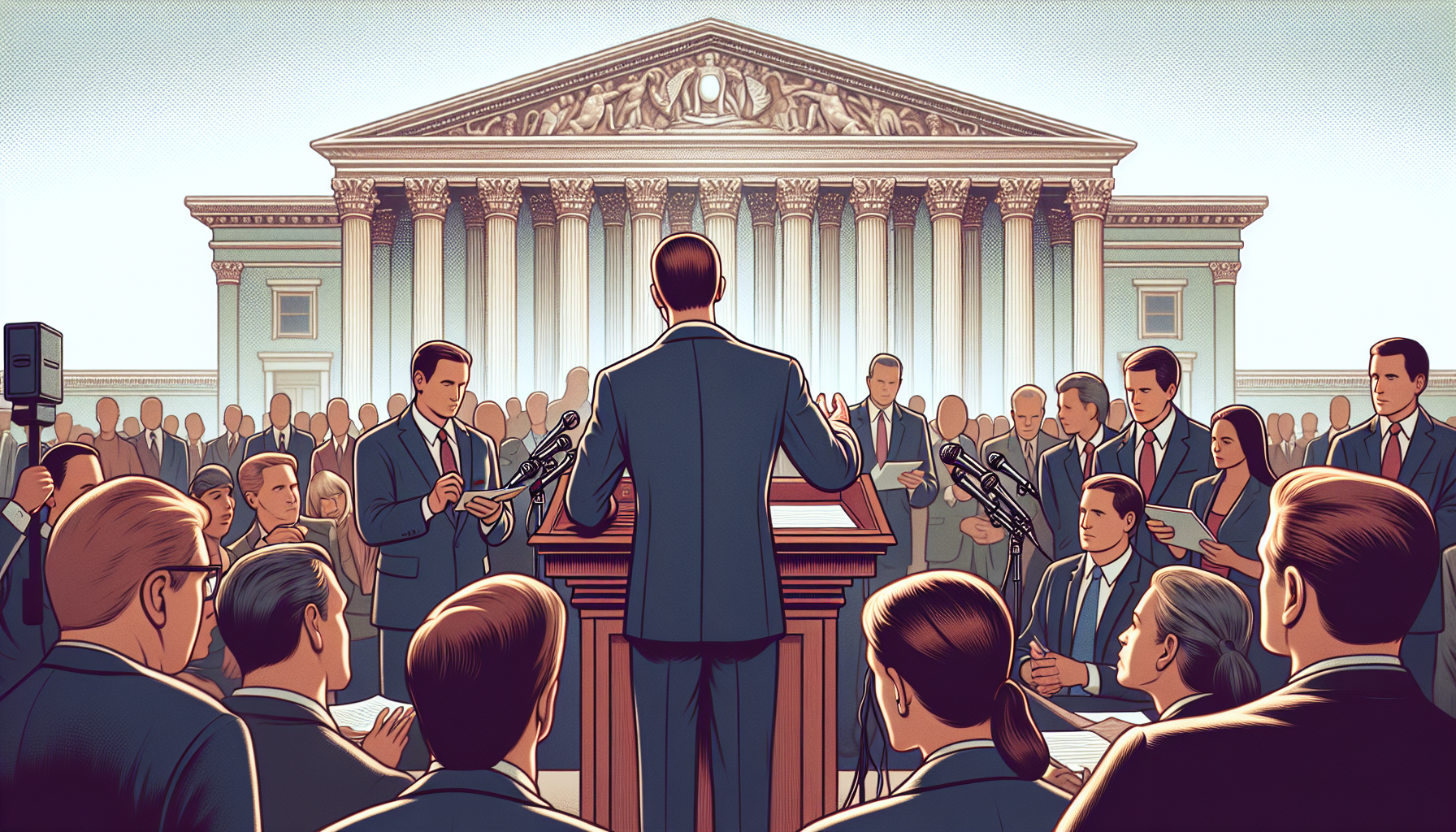
Watch: Trump Speaks After Supreme Court Strikes Down Tariffs
In a landmark decision, the United States Supreme Court has struck down tariffs imposed by the Trump administration, citing constitutional concerns and the overreach of executive power. This ruling has significant implications for the U.S. economy, international trade relations, and the political landscape, prompting a fiery response from former President Donald Trump. In this article, we delve into the details of the Supreme Court's decision, Trump's reaction, and the broader economic and political ramifications.
The Supreme Court Decision
The Supreme Court's ruling, delivered in a 6-3 decision, invalidated a series of tariffs that were primarily aimed at steel and aluminum imports, which had been imposed under Section 232 of the Trade Expansion Act of 1962. The majority opinion, written by Chief Justice John Roberts, emphasized that the executive branch had exceeded its authority under the Constitution by unilaterally imposing tariffs without clear congressional approval.
Roberts stated, "While the executive has the discretion to address national security threats, this power is not unlimited and must adhere to the framework established by Congress. The tariffs imposed overstepped the boundaries of executive authority and lacked the necessary legislative guidance."
The dissenting opinion, led by Justice Samuel Alito, argued that the executive branch must maintain flexibility to respond to national security threats swiftly, but ultimately, the majority prevailed, marking a defining moment in the balance between legislative and executive powers.
Trump's Response
Following the Supreme Court's decision, Donald Trump delivered an impassioned speech at his Mar-a-Lago estate in Florida. In his address, Trump criticized the ruling as "a political decision" and accused the Court of undermining American economic interests.
"This decision is a travesty," Trump stated. "The Supreme Court has chosen to side with foreign countries over American workers. My tariffs were designed to protect American jobs and industries from unfair competition and national security threats. We will not back down."
Trump's rhetoric underscores his longstanding focus on protectionist trade policies, which were a cornerstone of his administration. Advocating for American manufacturing and job creation, Trump consistently employed tariffs as a tool to leverage trade negotiations and bolster domestic industries.
Economic Implications
The Supreme Court's decision has far-reaching economic implications. Tariffs on steel and aluminum, which were initially imposed in 2018, had been controversial. Proponents argued they safeguarded American industries, while critics contended they increased costs for U.S. manufacturers and consumers.
According to the U.S. Chamber of Commerce, tariffs on steel and aluminum imports led to an average increase of 25% and 10% in prices, respectively. The Agricultural Economics Journal noted that American farmers, who are significant consumers of steel for machinery and equipment, faced increased production costs, which affected their competitiveness in global markets. This situation mirrors other challenges faced by agricultural producers, such as the ongoing debate around glyphosate production and its implications for farming practices.
With the tariffs struck down, economists anticipate a recalibration in the affected industries. The National Association of Manufacturers projects a potential 2% reduction in production costs for sectors heavily reliant on steel and aluminum.
Market Reactions
In the immediate aftermath of the Supreme Court's ruling, the stock market displayed mixed reactions. The Dow Jones Industrial Average experienced a brief uptick, gaining 0.5% as investors anticipated reduced costs for manufacturing companies. However, the U.S. Steel Corporation saw its shares decline by 3.2%, reflecting concerns over increased competition from foreign producers.
The S&P 500 saw a modest increase of 0.3%, driven by gains in sectors such as automotive and construction, which are significant consumers of steel and aluminum. Analysts from Goldman Sachs suggest that the ruling could lead to increased foreign investment in these industries, potentially boosting market competitiveness.
International Trade Relations
The Supreme Court's decision is also likely to impact international trade relations. Countries affected by the tariffs, including key U.S. allies like Canada and the European Union, had previously retaliated with their own tariffs, escalating trade tensions.
The World Trade Organization (WTO) had been critical of the U.S. tariffs, labeling them as inconsistent with international trade rules. The removal of these tariffs may pave the way for improved diplomatic relations and the possibility of renegotiating trade agreements.
Canadian Prime Minister Justin Trudeau welcomed the Supreme Court's decision, stating, "This is a positive step towards restoring fair trade practices. We look forward to working with the U.S. on building a more cooperative economic relationship." As the U.S. and Canada strengthen their ties, there are also intriguing developments in other areas, such as the release of U.S. alien files.
Political Ramifications
The Supreme Court's ruling has significant political ramifications, particularly as the U.S. approaches the 2024 presidential election. The decision is likely to become a contentious issue among candidates, with Republicans and Democrats taking divergent stances on trade policies.
For the Republican Party, Trump's tariffs have been a polarizing topic. While some members support protectionist measures, others advocate for free trade as a means of fostering economic growth. The ruling may deepen these divisions, influencing the party's platform in the upcoming election.
On the Democratic side, the decision may be leveraged to highlight the importance of legislative oversight and the need for a balanced approach to trade policies. President Joe Biden has emphasized the need for multilateral trade agreements and fair competition, aligning with the Court's rationale for striking down unilateral tariffs.
Looking Ahead
As the implications of the Supreme Court's decision unfold, several key questions remain. How will the ruling affect U.S. industries and workers in the long term? Will it lead to a reevaluation of trade policies and international agreements? And how will it shape the political discourse in the lead-up to the next election?
Economists and policymakers are closely monitoring the situation to assess the broader impact on the U.S. economy. The Congressional Budget Office (CBO) is expected to release a report in the coming months analyzing the potential economic effects of the ruling.
Conclusion
The Supreme Court's decision to strike down Trump's tariffs marks a pivotal moment in U.S. trade policy and constitutional law. As the nation grapples with the ruling's economic, political, and international implications, the debate over the balance of power between the executive and legislative branches is likely to intensify.
Donald Trump's response underscores the ongoing tension between protectionist trade measures and the principles of free trade. As the U.S. navigates these complex dynamics, the outcome will not only shape the economic landscape but also influence the discourse leading up to the 2024 presidential election. This development is particularly relevant in light of Trump's praise for Japan's investment in U.S. energy and mineral sectors.
Stay tuned to our website for further updates and in-depth analysis on this developing story.