
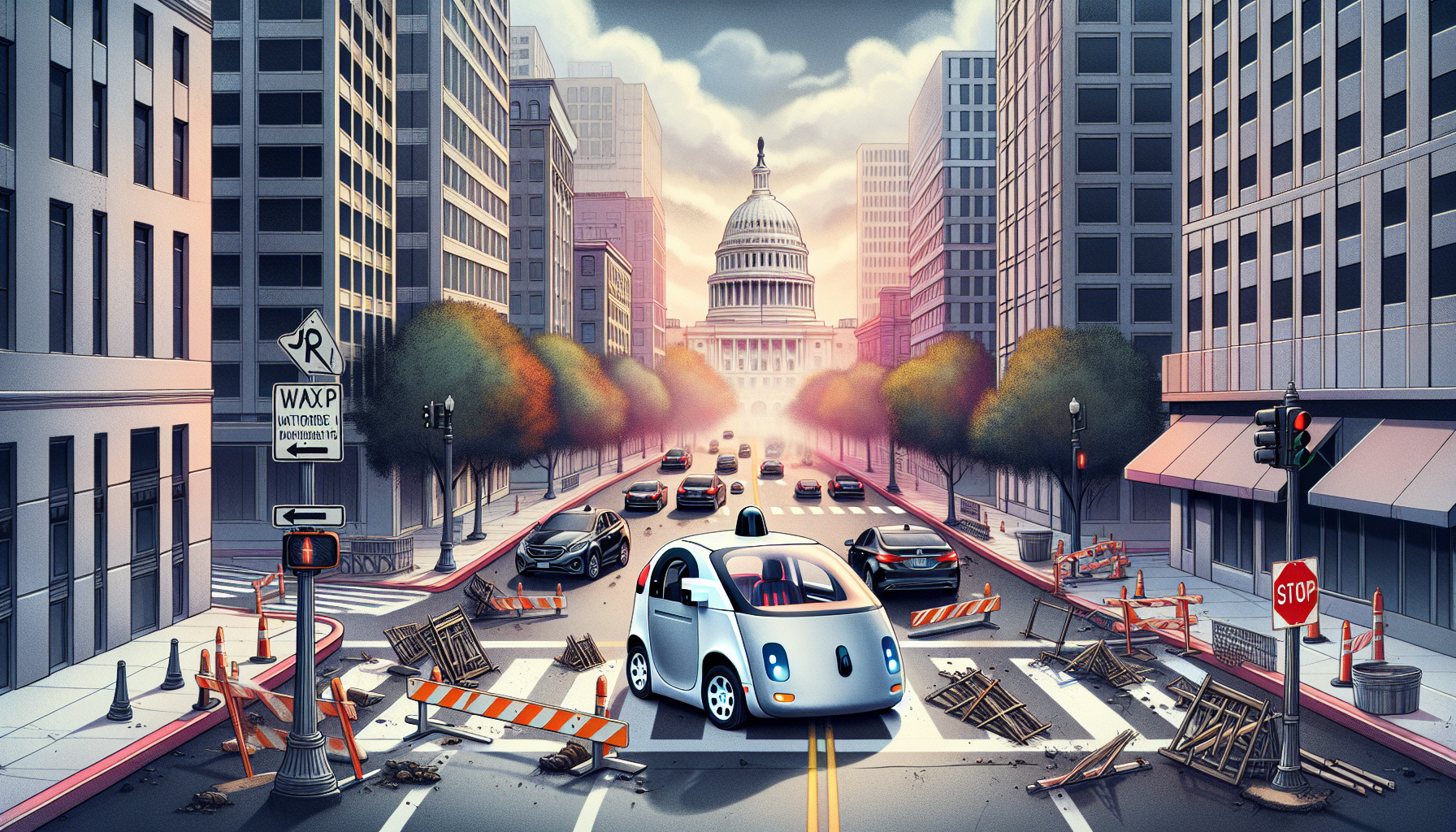
Waymo Hits a Rough Patch In Washington, DC
By [Journalist's Name]
Published on [Date]
Introduction
Waymo, the autonomous vehicle division of Alphabet Inc., has been a leader in the race towards self-driving technology. With numerous successful deployments in cities like Phoenix, Arizona, and San Francisco, California, Waymo has been at the forefront of transforming urban transportation. However, the company's recent foray into Washington, DC, has encountered a series of challenges that could test its resilience and adaptability.
The Washington, DC, Deployment
In late 2022, Waymo announced its plans to expand its autonomous vehicle testing to Washington, DC. The initiative was part of a broader strategy to assess the capabilities of its technology in a diverse range of urban environments. Washington, DC, with its unique blend of historical architecture, dense traffic, and complex road networks, was seen as an ideal testing ground.
The deployment aimed to include a fleet of modified Chrysler Pacifica minivans equipped with Waymo's latest sensor technology. These vehicles were initially intended to operate in geofenced areas within the city, with a focus on collecting data about local driving conditions, traffic patterns, and infrastructure.
Early Setbacks
Despite Waymo's ambitious plans, the deployment soon encountered several obstacles. One of the primary challenges stemmed from Washington, DC's stringent regulatory framework. Unlike other cities that had embraced autonomous vehicle testing with open arms, DC authorities were cautious, implementing rigorous oversight measures aimed at ensuring public safety.
These regulations required Waymo to secure multiple permits and comply with detailed reporting requirements. The bureaucratic hurdles slowed down the deployment process, causing delays in the timeline that Waymo had originally envisioned.
Technical Challenges
Beyond regulatory issues, Waymo's technology faced its own set of challenges on the streets of DC. The city's intricate road layout, characterized by numerous roundabouts, one-way streets, and narrow lanes, presented difficulties for the autonomous systems.
Furthermore, the unpredictable nature of DC's traffic, compounded by frequent roadwork and political events leading to road closures, tested the adaptability of Waymo's algorithms. The vehicles occasionally struggled with complex maneuvers, such as navigating through heavy congestion or making decisions in ambiguous situations. This challenge reflects a broader trend in technology, particularly as we examine the dynamics of Silicon Valley's evolving landscape.
Public Perception and Acceptance
Another hurdle for Waymo was gaining public trust and acceptance. Washingtonians, known for their fast-paced lifestyles and reliance on public transportation, were initially skeptical of the autonomous vehicles sharing their roads. Concerns about safety, privacy, and job displacement were prevalent among residents.
Waymo launched a comprehensive public relations campaign to address these concerns. The company hosted community events, engaged with local stakeholders, and provided transparent information about its safety protocols. However, changing public perception proved to be a gradual process, requiring sustained effort and demonstration of the technology's reliability.
Partnerships and Collaborations
In response to the challenges faced, Waymo sought to forge partnerships with local organizations and government agencies. Collaborations with academic institutions and transportation authorities were established to study and improve the integration of autonomous vehicles into the city's existing infrastructure.
These partnerships aimed to leverage local expertise and foster a collaborative approach to addressing regulatory and technical challenges. By working closely with the community, Waymo hoped to build trust and pave the way for smoother operations in the future.
Economic and Environmental Implications
The potential economic and environmental benefits of autonomous vehicles were key factors driving Waymo's interest in Washington, DC. By reducing traffic congestion and optimizing routes, autonomous vehicles could contribute to decreased emissions and improved air quality in the city.
Moreover, the deployment of autonomous vehicles had the potential to stimulate economic growth by creating new jobs in technology development, vehicle maintenance, and data analysis. However, realizing these benefits required overcoming the current challenges and achieving successful integration into the urban environment. Additionally, the technological advancements in various fields, much like the discoveries regarding colossal hidden structures beneath Earth's surface, can play a crucial role in shaping our future economic landscape.
Future Prospects
Despite the setbacks, Waymo remains committed to its vision of transforming urban mobility through autonomous vehicles. The company continues to refine its technology and strategies based on the insights gained from its experience in Washington, DC.
Looking ahead, Waymo plans to expand its testing areas within the city and explore opportunities for commercial deployment. The lessons learned from the DC deployment will likely influence the company's approach in other cities with similar urban complexities.
Conclusion
Waymo's journey in Washington, DC, highlights the multifaceted challenges of deploying autonomous vehicles in a complex urban landscape. While the path has not been without obstacles, the experience provides valuable insights into the future of autonomous transportation.
As Waymo navigates this rough patch, the company's adaptability, commitment to safety, and collaborative approach will play crucial roles in overcoming the hurdles and advancing the vision of a future where autonomous vehicles are an integral part of city life. In times of uncertainty, finding ways to unwind is essential, and what better way to relax than with some Netflix gems that can brighten your February?