
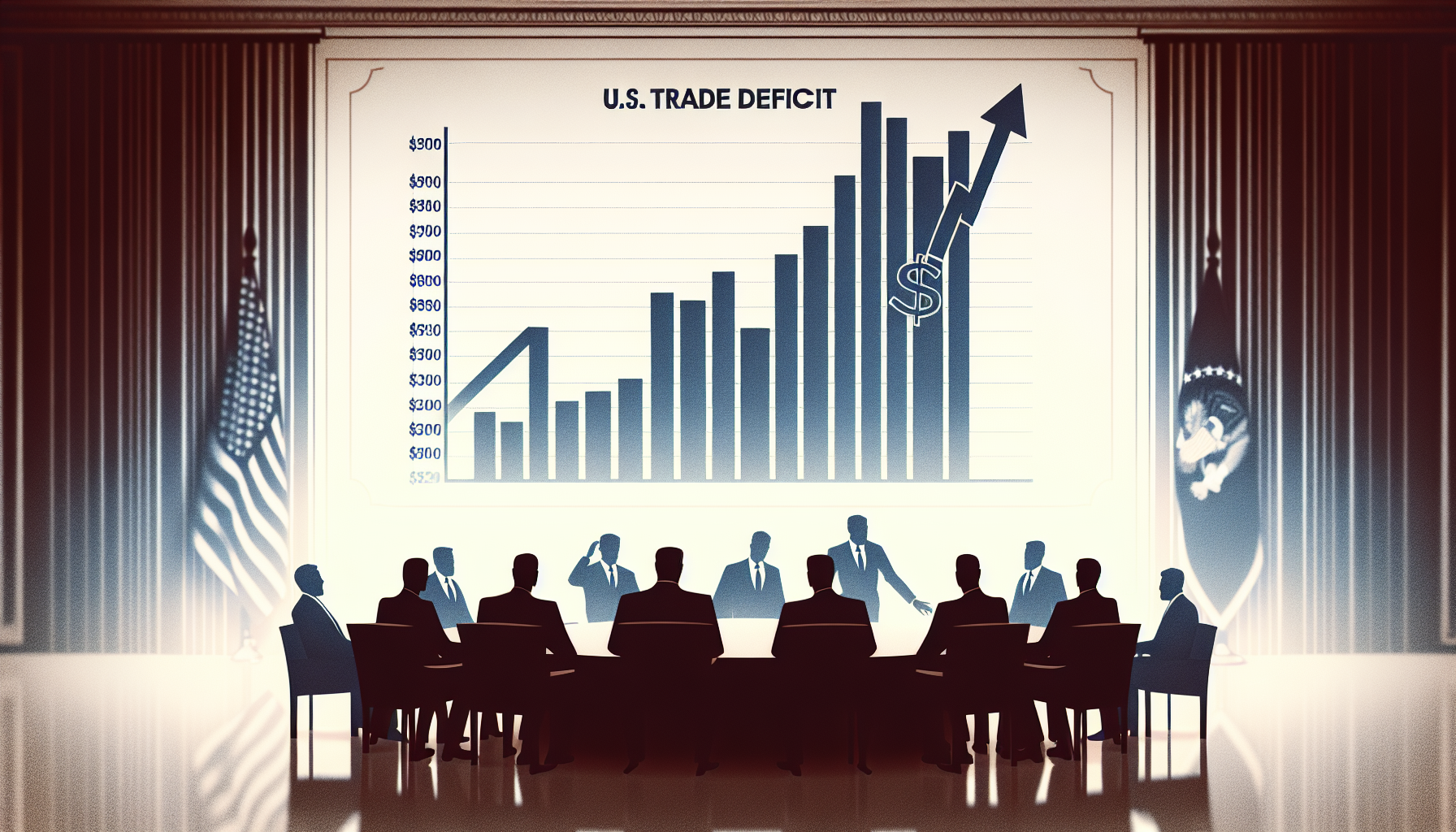
U.S. Trade Deficit Totaled $901 Billion in 2025, Barely Budging Despite Trump’s Tariffs
The U.S. trade deficit reached a staggering $901 billion in 2025, a figure that underscores the persistent challenges in balancing trade despite the tariffs imposed during the Trump administration. This article delves into the reasons behind the deficit, the effectiveness of tariffs, and their impact on the U.S. economy and international trade.
The Trade Deficit: An Overview
The trade deficit is a measure of how much more a country imports than it exports. For the United States, this figure has been a significant economic indicator, reflecting the complex dynamics of global trade. According to data from the U.S. Department of Commerce, the trade deficit for 2025 amounted to $901 billion, a slight increase from the $875 billion recorded in 2024.
While the deficit has remained relatively stable over the past few years, its persistence raises questions about the effectiveness of tariffs and other trade policies implemented by the Trump administration, which aimed to reduce the trade imbalance and protect domestic industries.
The Trump Tariffs: A Brief History
During his presidency, Donald Trump implemented a series of tariffs as part of his "America First" strategy. These tariffs primarily targeted China, the European Union, and other major trading partners. The goal was to encourage domestic manufacturing, reduce the trade deficit, and address unfair trading practices.
- China: In 2018, the U.S. imposed tariffs on $250 billion worth of Chinese goods, with rates ranging from 10% to 25%. China retaliated with tariffs on $110 billion of U.S. exports.
- European Union: In 2018, tariffs of 25% were placed on steel and 10% on aluminum imports from the EU, Canada, and Mexico.
- Global: A series of tariffs were applied to a variety of imports, including solar panels, washing machines, and more.
These measures were intended to protect U.S. industries by making imported goods more expensive and less competitive in the domestic market. However, the long-term effectiveness of these tariffs has been widely debated among economists and policymakers. These measures were intended to protect U.S. industries by making imports more expensive, a strategy that has implications for consumer spending, similar to the trends observed in Walmart's holiday sales surge.
Why the Trade Deficit Remains High
Despite the implementation of tariffs, the trade deficit has not seen the significant reduction that was anticipated. Several factors contribute to this ongoing issue:
1. Consumer Demand
The U.S. consumer market remains one of the largest in the world, with American consumers showing a strong preference for imported goods. This demand is driven by factors such as cost, variety, and quality, which often favor foreign products over domestic ones. As a result, imports continue to outpace exports, contributing to the trade deficit.
2. Global Supply Chains
Modern manufacturing is highly integrated into global supply chains. Many U.S. companies rely on imported components and raw materials to produce goods domestically. Tariffs on these imports can increase production costs, which may be passed on to consumers, further increasing the cost of U.S.-produced goods and impacting their competitiveness.
3. Currency Fluctuations
The value of the U.S. dollar plays a crucial role in international trade. A strong dollar makes U.S. exports more expensive and imports cheaper. In recent years, the dollar has remained strong against other currencies, which has not favored U.S. exports and has contributed to the trade deficit.
4. Trade Partners' Retaliation
Retaliatory tariffs from trade partners have also played a role in maintaining the trade deficit. When the U.S. imposed tariffs, affected countries responded with their own tariffs on U.S. goods, making it harder for American exporters to compete in these markets.
Economic Impacts of the Trade Deficit
The persistent trade deficit has significant implications for the U.S. economy. While some argue that it reflects a healthy economy with robust consumer demand, others point to potential negative impacts:
1. Impact on Domestic Industries
Industries that rely heavily on exports have been adversely affected by the trade deficit. For example, the agriculture sector has faced challenges due to retaliatory tariffs from countries like China, which targeted key U.S. exports such as soybeans and pork.
2. Manufacturing and Jobs
Manufacturing jobs, which were a focal point of the tariffs, have not seen the significant resurgence that was anticipated. While some industries have benefited from protectionist measures, others have suffered due to increased costs of imported raw materials and components.
3. Inflationary Pressures
Tariffs can contribute to inflation by increasing the cost of imported goods and the domestic products that use imported components. In 2025, the inflation rate in the U.S. reached 3.2%, partly driven by these increased costs. Higher prices can reduce consumer purchasing power and slow economic growth.
4. Trade Relations
The trade tensions resulting from tariffs have strained relationships with key trading partners. While some progress has been made in negotiations, such as the Phase One trade deal with China in 2020, the overall impact on diplomatic and economic relationships remains a concern.
Expert Opinions
Economists and trade experts have weighed in on the effectiveness of tariffs and the trade deficit:
Dr. Linda Jacobs, an economist at the International Trade Institute, states, "Tariffs are a blunt instrument for addressing complex trade issues. While they can protect certain industries, they often lead to unintended consequences that can exacerbate the trade deficit."
John Taylor, a senior analyst at Global Economics Group, notes, "The trade deficit is not solely a result of tariffs or trade policies. It's a multifaceted issue influenced by consumer behavior, global supply chains, and macroeconomic factors." Understanding these economic complexities can also shed light on how technology leaders like Zuckerberg engages with Apple CEO Cook regarding societal impacts.
Future Prospects and Policy Recommendations
Looking ahead, addressing the trade deficit will require a comprehensive approach that goes beyond tariffs. Experts suggest several strategies:
1. Promoting Domestic Production
Encouraging domestic production through incentives, tax breaks, and infrastructure investments can help reduce reliance on imports. This can also create jobs and strengthen the manufacturing sector.
2. Enhancing Trade Agreements
Negotiating trade agreements that eliminate barriers and promote fair trade practices can open new markets for U.S. exporters and help balance trade. The U.S. should engage in multilateral agreements that address not only tariffs but also non-tariff barriers, intellectual property rights, and labor standards.
3. Investing in Innovation
Investing in research and development can boost the competitiveness of U.S. products. By leading in innovation, American companies can offer unique products that are in demand globally, thus increasing exports.
4. Strengthening Currency Policies
Managing currency policies to ensure a competitive exchange rate can help make U.S. exports more attractive on the global market. Collaboration with other nations to address currency manipulation issues can also be beneficial.
Conclusion
The $901 billion trade deficit in 2025 serves as a reminder of the complexities inherent in global trade. While tariffs were implemented with the intent to balance trade, their limited impact highlights the need for multi-dimensional strategies. By addressing the structural issues underpinning the trade deficit, the U.S. can work towards a more balanced and sustainable trading future.
As the global economic landscape continues to evolve, the United States must adapt its trade policies to ensure competitiveness and growth in the international market. Only through comprehensive and collaborative efforts can the persistent challenge of the trade deficit be effectively managed. Innovative solutions, such as those found in quantum leap technologies, could play a crucial role in enhancing overall economic efficiency.