
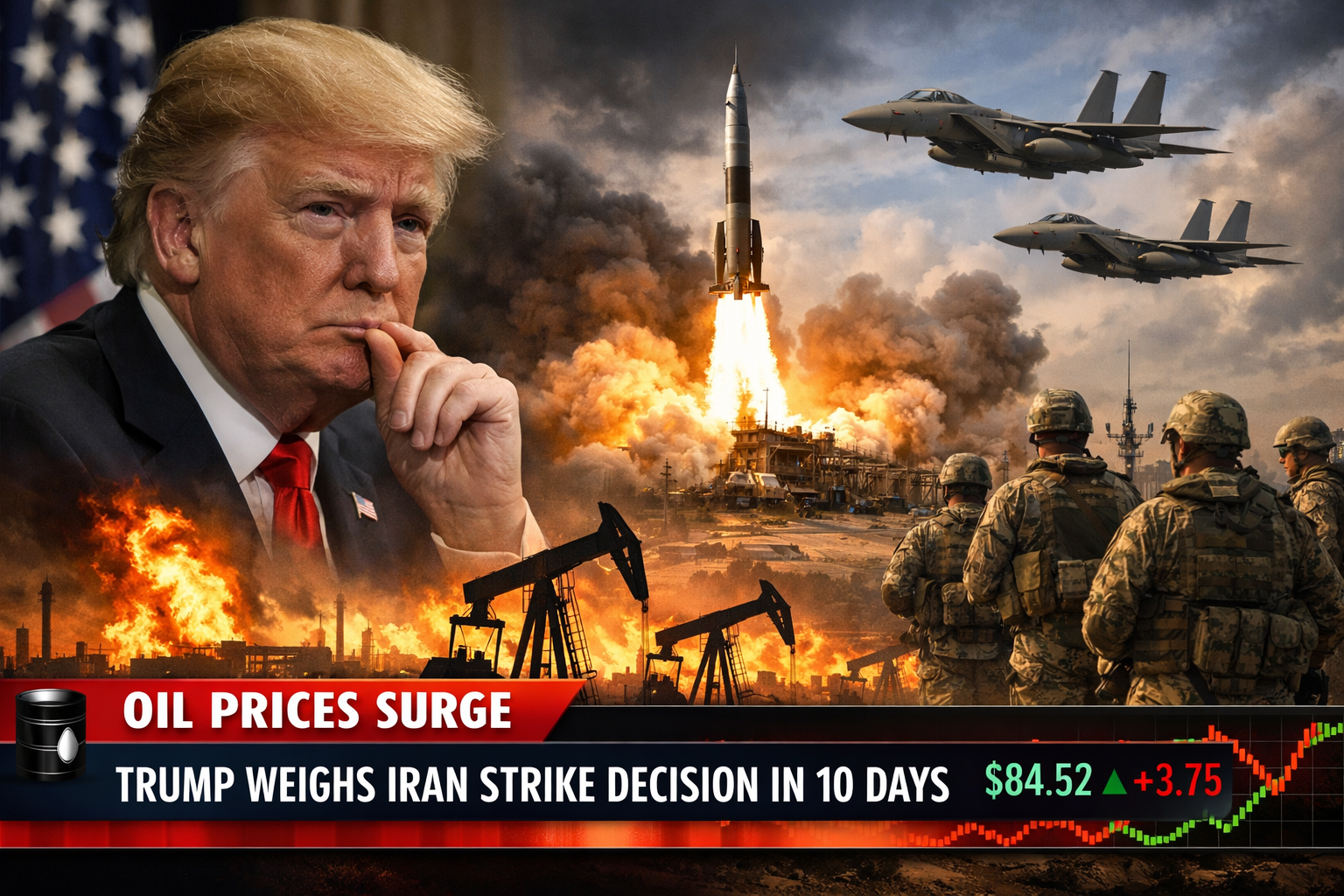
Trump Could Attack Iran in Days: What's at Stake for the Oil Market
The global oil market is on high alert as speculation mounts about a potential military strike by former U.S. President Donald Trump on Iran. Such a development could have profound implications for the international energy sector, potentially triggering significant volatility in oil prices. This article delves into the potential impacts of such a geopolitical event, providing an in-depth analysis supported by recent data, expert opinions, and market dynamics.
The Geopolitical Context
Since leaving office, Donald Trump has maintained a high-profile presence in American politics. Recent reports, however, suggest that he might take unprecedented steps in foreign policy, including a military attack on Iran. This situation arises from longstanding tensions between the two nations, exacerbated by Iran's nuclear ambitions and its influence in the Middle East.
Iran, as the world's fifth-largest oil producer, plays a crucial role in the global energy landscape. According to the U.S. Energy Information Administration (EIA), Iran's crude oil production averaged around 2.5 million barrels per day in 2022. A conflict involving Iran could disrupt this output, leading to significant consequences for global oil supply and prices.
Potential Impacts on Oil Supply
One of the most immediate consequences of a military strike on Iran would be the potential disruption of its oil exports. Iran's oil fields and infrastructure are concentrated in areas that might be affected by military action. The Strait of Hormuz, through which approximately 20% of the world's oil passes, could also become a flashpoint. Its closure or restricted access would severely impact oil transportation, causing supply shortages.
- Oil Production Disruption: Iran's production capacity would likely be impaired, reducing global oil supply. Given Iran's role in the Organization of the Petroleum Exporting Countries (OPEC), any reduction in its output could tighten the global oil market.
- Transportation Risks: The Strait of Hormuz, a critical chokepoint, could become unsafe for oil tankers. This would affect not only Iranian oil but also oil exports from other Gulf countries such as Saudi Arabia, Iraq, and the United Arab Emirates.
Oil Price Volatility
Historically, geopolitical tensions in the Middle East have led to sharp spikes in oil prices. A conflict involving Iran would likely follow this pattern. The price of Brent crude oil, a global benchmark, could experience significant volatility. In 2022, Brent crude prices fluctuated between $70 and $120 per barrel due to various geopolitical events, including the Russia-Ukraine conflict. Similar or greater fluctuations could occur with an escalation involving Iran.
Expert Opinions
Industry experts and analysts have weighed in on the potential ramifications of a military strike by Trump on Iran. According to John Driscoll, Chief Strategist at JTD Energy Services, "Any conflict with Iran could lead to a major disruption in the oil supply chain, which would inevitably cause prices to rise. The market is already nervous about potential supply shortages, and this could exacerbate those fears."
Similarly, Helima Croft, Head of Global Commodity Strategy at RBC Capital Markets, notes, "The Gulf region is a critical hub for the oil market, and any conflict that threatens this area could send shockwaves through the market. The uncertainty alone could lead to speculative trading and price hikes."
Market Data and Projections
To understand the potential impact on the oil market, it's essential to look at recent data and projections. According to the International Energy Agency (IEA), global oil demand is expected to average 101.9 million barrels per day in 2023, up from 99.7 million barrels per day in 2022. This increase in demand underscores the importance of stable oil supplies.
The current market conditions are already tight, with OPEC+ maintaining production cuts to support prices. As of October 2023, Brent crude is trading at approximately $85 per barrel, reflecting a market that is sensitive to supply disruptions. A conflict with Iran could push prices above $100 per barrel, straining global economies and potentially leading to inflationary pressures. The potential for such price increases is underscored by current geopolitical tensions, as seen in oil prices surge amid Iran conflict.
Potential Reactions from Global Players
The response of other global players to a conflict involving Iran would also shape the oil market's trajectory. Countries heavily reliant on oil imports, such as China, India, and Japan, may seek alternative suppliers or increase their strategic reserves to mitigate supply risks. Additionally, the United States, with its significant shale oil production, could potentially ramp up output to offset some of the lost Iranian supply.
- China: As one of the largest importers of Iranian oil, China might look to diversify its suppliers or negotiate terms with other major producers. It could also tap into its reserves to cushion against immediate supply shortages.
- India: India, another significant importer, would likely face rising import costs, potentially affecting its economy. It might explore strategic partnerships with other oil-producing nations to ensure supply continuity.
- United States: The U.S. has the potential to increase its shale production, which could help stabilize the global market. However, logistical and infrastructural challenges might limit the speed of any production ramp-up.
Long-term Implications for the Oil Market
Beyond the immediate impacts, a military conflict involving Iran could have long-term implications for the global oil market. Investors might become increasingly wary of geopolitical risks in the Middle East, leading to shifts in investment strategies. This could accelerate the transition towards more diversified energy sources, including renewables, as countries seek to reduce reliance on volatile oil markets.
Moreover, sustained high oil prices could incentivize further investment in alternative energy technologies. Countries might also accelerate energy efficiency measures to reduce oil dependency, impacting future demand growth.
Conclusion
As the world watches the unfolding geopolitical situation, the potential for a Trump-led attack on Iran poses significant risks to the global oil market. The immediate threat of supply disruptions and price volatility could have far-reaching consequences for economies worldwide. While the situation remains fluid, stakeholders in the oil industry and beyond are closely monitoring developments, preparing for potential outcomes that could reshape the energy landscape.
For now, the oil market remains on edge, with participants bracing for potential shocks that could redefine the dynamics of global energy supply and demand. As geopolitical tensions continue to influence various sectors, including technology, recent events highlight the importance of security in Silicon Valley operations.
In the coming days, all eyes will be on diplomatic channels and strategic responses from key global players, as the world braces for a potential escalation in tensions that could send ripples through the international oil market. As market participants assess the impact of these geopolitical developments, they will also be closely monitoring NASDAQ market trends for any signs of volatility.